

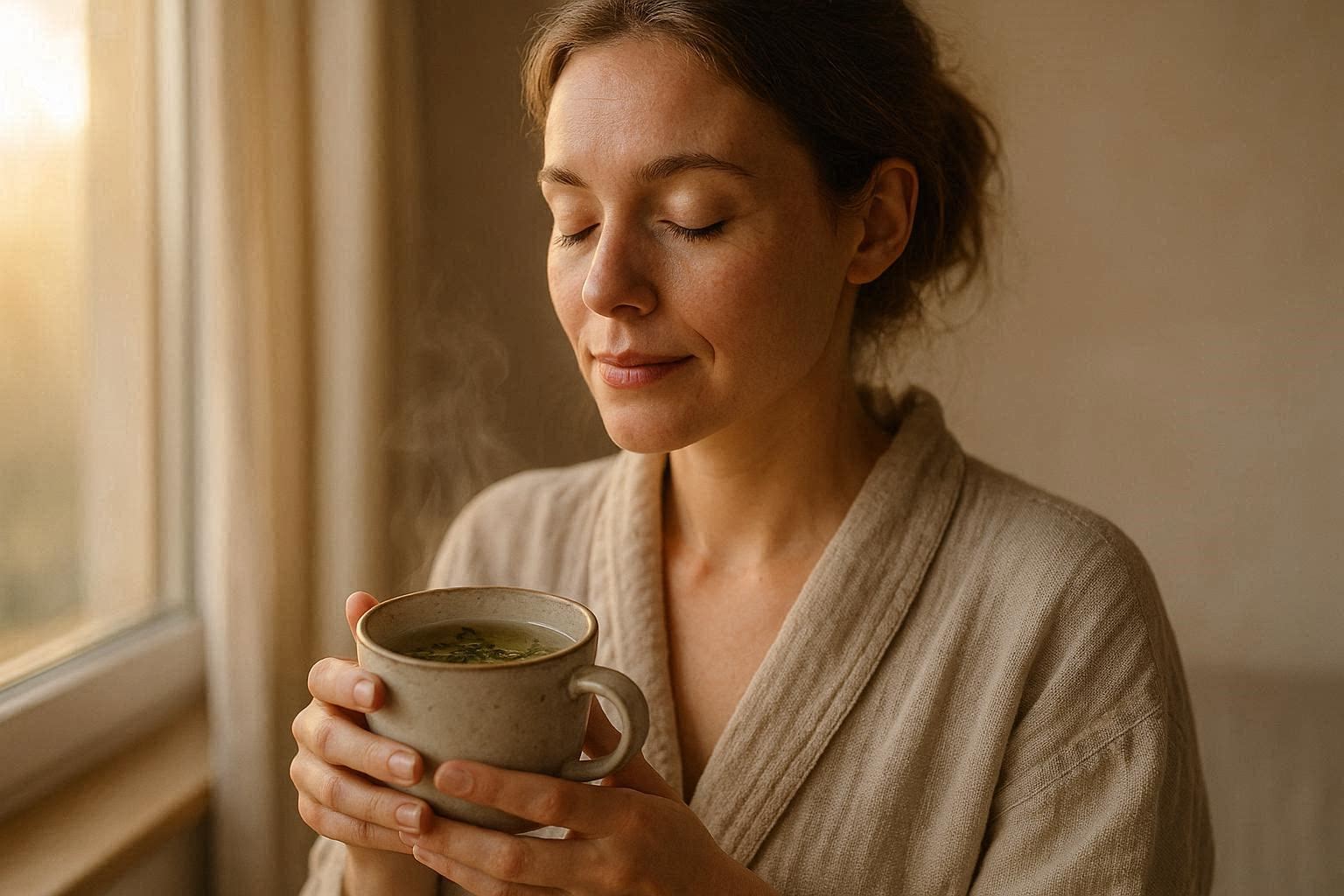

The Cup That Changes Everything
My morning skincare routine takes eleven minutes.
Two minutes to cleanse. One minute for toner. Two minutes for serum and moisturiser. One minute for SPF. And — the step I did not take seriously for years — five minutes to sit quietly with a cup of herbal tea before the day began.
That last step, the one that felt like indulgence rather than skincare, turned out to produce more visible results than anything I applied to my face.
I know how that sounds. But here is what I have come to understand: finding the best herbal tea for skin isn’t about chasing trends. It’s about consistency. The compounds in specific herbal teas — consumed daily and prepared correctly — work on your skin through mechanisms that no topical product can fully replicate. They reduce systemic inflammation, support natural collagen synthesis from within, and deliver antioxidants directly to tissues that surface-level serums simply cannot reach.
This is not wellness mythology. It is documented in peer-reviewed research on nutrition, dermatology, and plant biochemistry. And the practical application is as simple as knowing which teas to drink, when to drink them, and how to prepare them — hot in the morning, iced in the afternoon, either way extraordinary.
The Science — How Herbal Tea Works on Skin From the Inside

Every cup of herbal tea contributes to your daily fluid intake — which already gives it a baseline advantage for skin hydration. But the specific benefit of herbal tea over plain water lies in what it carries with it.
Herbal teas deliver bioactive compounds — flavonoids, polyphenols, vitamins, and trace minerals — that enter your bloodstream and travel to every tissue in your body, including the deeper dermal layers where collagen and elastin are produced. Research in nutritional dermatology confirms that systemic antioxidants reach these deeper tissues more effectively than many topical formulations, which often struggle to penetrate beyond the stratum corneum.
Anti-inflammatory compounds in herbs help modulate chronic low-grade inflammation — the type that doesn’t always show as visible redness but contributes to accelerated ageing, barrier dysfunction, and reactive breakouts. Antioxidants neutralise free radical damage caused by UV exposure, environmental pollution, and metabolic stress — the same oxidative damage that drives pigmentation, uneven texture, and loss of elasticity. Minerals replenish the electrolyte balance that enables optimal cellular hydration.
No serum, however well formulated, can replicate this internal delivery system. That’s why identifying the best herbal tea for skin is less about a single miracle ingredient and more about building a targeted, daily ritual.
The 7 Teas — What Each One Does and How to Use It
1. Chamomile — for Redness, Sensitivity & Sleep Quality

Chamomile contains apigenin, a flavonoid with well-documented anti-inflammatory and calming properties. Chronic skin inflammation accelerates collagen breakdown and compromises the moisture barrier. Regular consumption helps moderate this response from the inside. Additionally, chamomile supports deeper sleep cycles — and sleep is when skin barrier repair, cellular turnover, and collagen synthesis peak. (Research on apigenin’s anti-inflammatory and skin-barrier support is documented in Phytomedicine and the Journal of Ethnopharmacology.)
Prep: Steep 1 tsp dried flowers in 90°C water for 7 minutes. For iced: brew at double strength, chill, pour over ice.
Best Time: Evening, 1 hour before bed.
2. Nettle Leaf — for Mineral Replenishment & Hair-Skin Support

Nettle is exceptionally mineral-dense, providing meaningful amounts of iron, silica, magnesium, potassium, and calcium. Silica specifically supports the structural integrity of collagen and keratin. (Clinical reviews in Phytotherapy Research and the Journal of Cosmetic Dermatology highlight silica’s role in connective tissue strength and nettle’s mineral delivery for skin and hair resilience.)
Prep: Steep 1 tsp dried leaf in boiling water for 8–10 minutes. Strain well.
Best Time: Mid-morning or with lunch.
3. Rosehip — for Collagen Support & Brightening

Rosehips are among the highest natural dietary sources of vitamin C, which is a required cofactor in every stage of collagen synthesis. Vitamin C also supports melanin regulation, helping fade post-inflammatory marks. Heat degrades vitamin C, so cold-brewing preserves maximum potency. (Peer-reviewed studies in Clinical Interventions in Aging and the Journal of Cosmetic Dermatology confirm oral vitamin C’s direct impact on collagen production and hyperpigmentation reduction.)
Prep: Cold-brew 1 tbsp crushed rosehips in 500ml filtered water overnight (8–12 hours). Strain and serve chilled.
Best Time: Morning or early afternoon.
4. Peppermint — for Acne-Prone Skin & Digestive Clarity

Peppermint contains menthol and rosmarinic acid, both showing antibacterial and soothing properties. More importantly, it supports healthy digestion and bile flow. The gut-skin axis is well-established in dermatological literature; improved digestive efficiency often correlates with clearer, more balanced skin. (Research published in Nutrients and Evidence-Based Complementary and Alternative Medicine details peppermint’s digestive modulation and its downstream impact on inflammatory skin conditions.)
Prep: Steep 1 tsp dried leaves in 90°C water for 5 minutes. Cover while steeping to retain volatile oils.
Best Time: After meals.
5. Rooibos — for Antioxidant Protection & Daily Calm

Naturally caffeine-free, rooibos contains two unique polyphenols — aspalathin and nothofagin — not found in other plants. These compounds show strong free-radical scavenging activity. Rooibos also contains zinc, a mineral essential for wound healing and sebum regulation. (Studies in Food Chemistry and the Journal of Agricultural and Food Chemistry confirm rooibos’s unique antioxidant profile, while Dermatology Research and Practice documents zinc’s role in skin repair and oil regulation.)
Prep: Steep 1 tsp in boiling water for 5 minutes. Excellent cold-brewed overnight for summer.
Best Time: Anytime; replaces afternoon coffee without the crash.
6. Green Tea — for Photoprotection & Longevity Support

While technically not “herbal” (it comes from Camellia sinensis), it belongs in any serious skin-focused tea rotation. EGCG, its primary catechin, has extensive research backing its photoprotective, anti-inflammatory, and sebum-regulating effects. Steeping temperature matters: boiling water degrades EGCG and increases bitterness. (Research in the British Journal of Nutrition, Nutrients, and the Journal of the American Academy of Dermatology consistently validates EGCG’s systemic photoprotection and anti-inflammatory pathways.)
Prep: Steep 1 tsp at 75°C for 2–3 minutes. Cover to preserve volatiles.
Best Time: Morning or pre-workout.
7. Hibiscus — for Collagen Protection & Natural Brightening

Hibiscus has one of the highest anthocyanin contents of any common botanical. Anthocyanins show documented elastase inhibition in laboratory studies, meaning they help protect existing elastin from breakdown. The tart, cranberry-like flavour makes it a favourite for summer hydration. (Clinical and in vitro studies in Pharmaceutical Biology and the Journal of Cosmetic Dermatology confirm hibiscus’s elastase-inhibiting activity and its support for skin elasticity and tone.)
Prep: Cold-brew 2 tbsp dried calyces in 500ml water overnight. Strain and serve over ice.
Best Time: Mid-afternoon as a refreshing, low-sugar alternative to soda.
The Daily Ritual — Building It Into Your Routine

You do not need all seven teas simultaneously. Choose two or three that align with your primary skin concerns and commit to them consistently for at least four weeks before adding or swapping.
A simple starting framework:
Morning: Green tea or rooibos for antioxidant protection that lasts through the day.
Midday: Peppermint or nettle for digestive support and mineral replenishment.
Evening: Chamomile for anti-inflammatory support and sleep quality optimisation.
Three cups. Three windows of internal skincare that work alongside your external routine. The bioactive profile remains identical whether consumed hot or cold-brewed, making seasonal adaptation effortless.
Quality & Storage Tips:
Buy loose-leaf or whole-leaf tea bags when possible. Dust-grade tea loses potency faster.
Store in airtight, opaque containers away from heat and humidity.
Use filtered water. Chlorine and heavy metals in tap water can bind to polyphenols and reduce absorption.
The cost of a high-quality, rotating herbal tea practice averages $15–$20 per month — less than a single mid-range serum, and delivering a category of systemic support that topicals cannot replicate.
What to Expect — The Honest Timeline

Changes happen gradually. Knowing the timeline prevents the most common mistake: abandoning the practice before internal shifts become visible.
Week 1: Better hydration balance, steadier afternoon energy, slightly improved digestion. Skin may feel less tight after cleansing.
Week 2–3: Reduced reactive redness, fewer midday breakouts, smoother makeup application. The dullness that no serum fixed begins to lift.
Week 4+: Noticeable improvement in skin “bounce” and light reflection. Fine lines appear softer due to improved cellular hydration and collagen support. Friends may comment on your glow before you mention the tea change.
Who Should Be Cautious
Herbal teas are generally safe, but they contain active compounds that can interact with medications or conditions:
Pregnancy/Nursing: Avoid high doses of hibiscus, rosehip, or peppermint without medical approval.
Blood Thinners/Heart Medication: Green tea and hibiscus can affect blood pressure or clotting. Consult your doctor.
Hormone-Sensitive Conditions: Some herbs contain phytoestrogens. Speak with a healthcare provider before daily use.
Allergies: Those sensitive to plants in the Asteraceae family (like chamomile) should patch-test or avoid.
When in doubt, start with one cup daily, monitor your body’s response, and consult a qualified professional.
FAQ: Best Herbal Tea for Skin
Which is the best herbal tea for skin overall?
There is no single “best” option, but green tea and rooibos are the most consistently researched for antioxidant protection and skin longevity. For sensitive or reactive skin, chamomile and peppermint are excellent starting points.
Can I drink herbal tea if I’m on medication?
Many herbs interact with prescription drugs (especially blood thinners, blood pressure meds, and hormone therapies). Always check with your doctor or pharmacist before making daily tea consumption a habit.
Does adding honey or lemon ruin the benefits?
A small squeeze of fresh lemon actually enhances polyphenol absorption and adds vitamin C. Honey is fine in moderation, but high sugar intake can trigger glycation, which accelerates collagen breakdown.
Is cold-brewed tea less effective?
No. Cold brewing actually preserves heat-sensitive compounds like vitamin C and certain antioxidants. The only difference is extraction speed — overnight steeping compensates for the lower temperature.
How much should I drink daily?
2–3 cups daily is the sweet spot for consistent benefits without overloading your system. More is not necessarily better and can strain digestion or electrolyte balance.
Can herbal tea replace my skincare routine?
No. Internal hydration and antioxidant support complement topical care. You still need gentle cleansing, targeted actives, and daily SPF. Think of tea as building the foundation — your skincare routine is the architecture.
Conclusion — The Ritual That Lasts

There is something worth saying about the ritual aspect of this practice — separate from its clinical benefits.
Taking five to ten minutes, twice or three times a day, to prepare and drink a cup of tea is an act of attention. You are paying attention to what your body needs, what your skin is asking for, what a consistent daily practice can produce over time.
The skin you have in six months is built from the choices you make every day — what you drink, what you apply, how you sleep, how you manage stress. Herbal tea is a small choice. Made consistently, it is a compound choice — and compound choices produce compound results.
Start tomorrow morning. One cup of green tea, steeped properly, before your skincare routine. That is the entire commitment for week one.
The rest follows naturally.
Which of these teas do you already drink, and which is new for you? Tell us in the comments — and if you have a specific skin concern, ask which tea I would recommend for your routine.
You Might Also Enjoy:
How to Hydrate Skin from Inside Naturally: The Salt-Water Method That Actually Works
Tallow Cream: The Ancient Moisturiser That Is Going Viral
The Complete Hydration Protocol: Inside and Outside
Health Is What You Have in Your Kitchen
(Informational purposes only — not medical advice.)
⚠️ Medical Disclaimer: I am not a medical professional or licensed dietitian. This article shares research-backed information and personal experience. Herbal teas are not a substitute for medical treatment. Consult a healthcare provider before adding new herbal supplements to your routine, especially if you are pregnant, nursing, taking medication, or managing a chronic condition.
Disclosure: This post contains affiliate links. We may earn a small commission if you purchase through our links, at no extra cost to you. All content is for informational purposes only and does not constitute medical advice.