

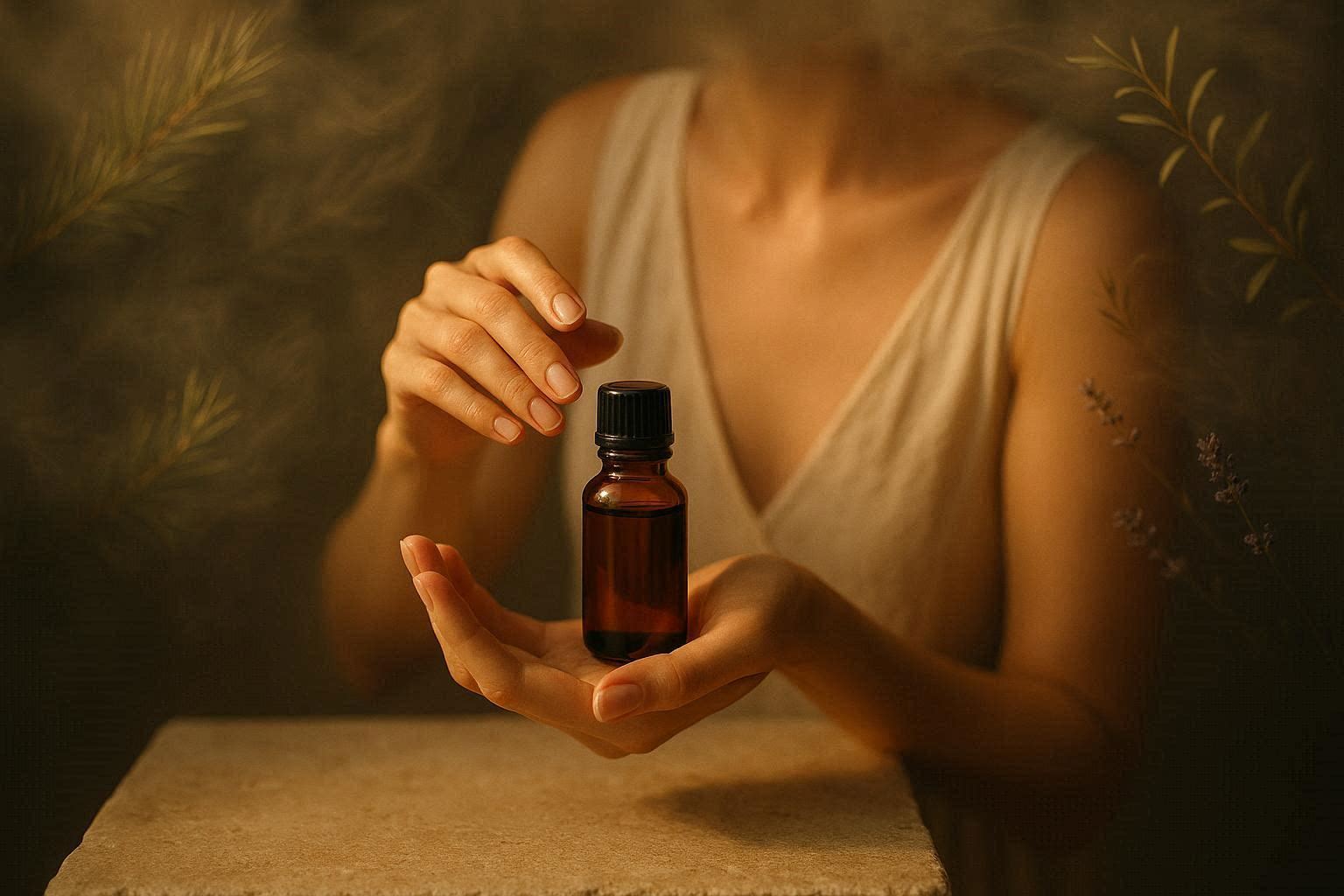

The Bottle I Almost Overlooked
It was the smallest bottle on the shelf.
Dark glass. Simple label. A fragrance so concentrated that one drop on the back of my hand filled the room with something that smelled simultaneously like a forest floor and a Mediterranean hillside.
I had walked past bottles like it for years — in natural food shops, pharmacies, wellness aisles — convinced they were pleasant but largely decorative. A nice smell. A mood thing. Something people with diffusers and yoga mats took more seriously than I did.
That was before I understood what essential oils actually are, how they interact with skin and the nervous system, why they have been central to beauty and healing traditions for millennia, and how to use them safely — diluted in the right carrier oil, at the correct concentration, for the right purpose.
This is the guide I wish I had found when I started. Complete, practical, and honest about what these botanical compounds can and cannot do.
⚠️ Medical Disclaimer: I am not a dermatologist, physician, or certified aromatherapist. This article shares research-backed information and personal experience with essential oils for skin and beauty. Essential oils are highly concentrated botanical compounds. Always follow dilution guidelines, patch test before use, and consult a qualified healthcare provider if you are pregnant, nursing, managing a chronic condition, or taking prescription medications.
What Essential Oils Actually Are

Essential oils are not oils in the traditional sense. They are volatile aromatic compounds extracted from plant flowers, leaves, bark, roots, or resin through steam distillation or cold pressing. They evaporate rapidly at room temperature, which is precisely why their fragrance and biological activity are so immediate.
A single drop of lavender contains over 100 distinct chemical constituents. Linalool and linalyl acetate — the primary active compounds — have documented anti-inflammatory, antimicrobial, and anxiolytic (anxiety-reducing) effects in peer-reviewed literature. This complexity isn’t marketing. It’s biochemistry.
Because they are so concentrated, essential oils must never be applied undiluted to the skin. Undiluted application can cause irritation, chemical sensitisation, and in some cases, contact dermatitis. Diluted correctly in a carrier oil for essential oils, they become safe, highly effective, and extraordinarily versatile.
Understanding Carrier Oils — The Foundation of Every Blend

A carrier oil is a plant-based fatty oil used to dilute essential oils before topical application. It performs two critical functions: it reduces potency to a skin-safe level, and it transports active aromatic compounds into the skin’s lipid matrix.
Carrier oils are not inert. Each has its own fatty acid profile, vitamin content, and skin affinity. Choosing the right one amplifies your blend’s effectiveness.
Jojoba Oil — Molecularly closest to human sebum. Lightweight, non-greasy, highly stable. Best for: all skin types, facial massage, daily use.
Rosehip Seed Oil — Rich in linoleic acid, vitamin C precursors, and natural trans-retinoic acid. Best for: mature skin, hyperpigmentation, texture refinement.
Sweet Almond Oil — High in oleic acid, deeply nourishing, slower absorption. Best for: body massage, dry or sensitive skin.
Fractionated Coconut Oil — Stays liquid at room temperature, lightweight, long shelf life. Best for: body massage, budget-friendly blending.
💡 PRO TIP: Never mix water and essential oils without an emulsifier. Oils and water separate, leaving undiluted droplets on the skin’s surface. Always dilute essential oils into a carrier oil or salt base before adding to a bath or spray.
The Essential Oils — What Each One Does (Science-Backed)

Lavender (Lavandula angustifolia)
The most versatile oil for beginners. Clinical reviews confirm its anti-inflammatory and antimicrobial properties, while inhalation studies show measurable reductions in salivary cortisol and self-reported anxiety. Ideal for calming reactive skin, supporting overnight repair, and reducing stress-related breakouts.
Rosemary (Rosmarinus officinalis)
Best known for scalp and hair support. A comparative clinical trial published in Skinmed demonstrated rosemary oil performed comparably to 2% minoxidil for hair density at six months, with significantly less scalp itching. Stimulates local circulation and supports follicle health. Avoid during pregnancy.
Frankincense (Boswellia carterii)
Highly valued in mature skincare. Boswellic acids show documented anti-inflammatory and tissue-repairing activity in pharmacological studies. Frequently used in facial massage blends to support skin elasticity, calm inflammation, and promote a refined tone. Also deeply grounding when diffused.
Tea Tree (Melaleuca alternifolia)
One of the most extensively researched botanicals for acne-prone skin. Studies in the Journal of Antimicrobial Chemotherapy confirm its efficacy against C. acnes and anti-inflammatory action. Must be diluted to 5% or less for facial use. Patch test required for sensitive skin.
Peppermint (Mentha piperita)
Menthol provides a cooling, circulation-stimulating sensation. Excellent in scalp massage blends and tension-relief applications. Clinical literature supports its topical use for tension headaches and muscle fatigue when diluted correctly. Keep away from children under six and avoid near the eyes.
Geranium (Pelargonium graveolens)
A balancing oil for both skin and mood. Traditionally used to support hormonal equilibrium and lymphatic drainage. Its floral-rosy scent blends seamlessly with most essential oils and is frequently recommended in aromatherapy for glowing skin routines targeting dullness or stress-related breakouts.
💡 INSIGHT: The quality of your oil dictates its safety and efficacy. Adulterated or synthetic blends lack the full phytochemical matrix and can trigger allergic reactions. Always look for 100% pure essential oils, clearly labeled botanical names (Latin), and transparent sourcing.
Ready-to-Use Essential Oil Massage Blends

All blends below follow the standard 2% facial dilution and 3% body dilution. This equals approximately 12 drops of essential oil per 30ml (1oz) of carrier oil for body use, and 6–8 drops per 30ml for facial use.
Blend 1: Facial Glow Massage Oil
For: luminosity, circulation, mature skin
30ml jojoba oil + 3 drops frankincense + 2 drops geranium + 2 drops lavender
Apply 3–5 drops to clean, damp skin in the evening. Massage in upward, outward strokes for 3–5 minutes. Supports lymphatic flow and delivers active compounds to the dermal layer.
Blend 2: Scalp Growth & Health Oil
For: thinning hair, scalp clarity, follicle support
30ml jojoba oil + 5 drops rosemary + 3 drops peppermint + 2 drops lavender
Apply to scalp in sections. Massage with firm fingertip pressure for 4 minutes. Leave on for 30+ minutes or overnight. Shampoo thoroughly. Use 3x weekly. Assess results at 3 months.
Blend 3: Sleep & Cortisol Reset
For: stress-related skin issues, evening ritual, barrier repair
30ml sweet almond oil + 4 drops lavender + 3 drops frankincense + 2 drops geranium + 1 drop Roman chamomile
Massage into décolletage, back of neck, and wrists before bed. Alternatively, diffuse 5 drops lavender 30 minutes before sleep. Chronic cortisol elevates inflammation and accelerates collagen breakdown. This blend targets the root cause, not just surface symptoms.
Blend 4: Energising Body Massage
For: circulation, muscle tension, morning vitality
30ml fractionated coconut oil + 5 drops peppermint + 4 drops rosemary + 3 drops lavender
Apply with long upward strokes toward the heart. Ideal post-workout or on heavy legs. Improves local circulation and delivers oxygenated blood to skin tissue.
Blend 5: Foot Bath Ritual
For: stress reduction, sleep preparation, reflexology support
Warm foot bath + 2 tbsp coarse sea salt + 3 drops lavender + 2 drops peppermint + 1 drop frankincense
Drop oils onto salt first, then add to water. This prevents undiluted oil from pooling on the surface. Soak 15 minutes. The combination of heat, minerals, and aromatic absorption creates a measurable parasympathetic shift — the exact state needed for overnight skin regeneration.

💡 PRO TIP: Apply facial blends to slightly damp skin. Water acts as a penetration enhancer, allowing carrier oils and essential compounds to absorb more evenly without tugging or dragging on mature skin.
Safety Rules — Non-Negotiable Guidelines
Essential oils are potent botanical extracts. These rules apply without exception:
Always Dilute: 1–2% for face (6–8 drops/30ml). 2–3% for body (10–12 drops/30ml). Never apply neat.
Always Patch Test: Apply diluted blend to inner forearm. Wait 24 hours. Discontinue if redness, itching, or heat occurs.
Phototoxicity Warning: Citrus oils (bergamot, lemon, lime, grapefruit) can cause severe burns if exposed to UV light within 12–18 hours. Avoid sun exposure after use or choose FCF (furanocoumarin-free) versions.
Pregnancy & Nursing: Avoid rosemary, peppermint, clary sage, and wintergreen unless cleared by a healthcare provider. Lavender, frankincense, and geranium are generally well-tolerated but require medical confirmation.
Storage & Shelf Life: Keep in dark glass, away from heat and sunlight. Citrus oils last 6–12 months. Lavender and peppermint last 2–3 years. Frankincense up to 5 years. Oxidized oils lose therapeutic value and increase sensitisation risk.
💡 INSIGHT: The best essential oils beauty routine isn’t about using more oils — it’s about using fewer, higher-quality oils consistently. Over-blending dilutes efficacy and increases sensitisation risk. Start with 2–3 oils, master your dilution, and expand only when needed.
Pro Tips & Insights for Your Best Essential Oils Beauty Routine
Layer Smart: Apply water-based serums first, let them absorb fully, then seal with your essential oil carrier blend. This prevents pilling and ensures active ingredients penetrate in the correct order.
The 3-Minute Massage Rule: Gentle, consistent pressure matters more than force. Use your ring finger (it applies the least pressure) and move upward along the jaw, cheekbones, and forehead. This mimics natural lymphatic drainage pathways.
Diffusion Timing: Run your diffuser for 30–45 minutes, then turn it off. Continuous diffusion overwhelms the respiratory system and reduces therapeutic impact. Intermittent use maintains aromatic sensitivity.
Track Your Skin: Photograph your skin in consistent lighting on day 1, day 30, and day 60. Essential oils work systemically and gradually. Visible changes in tone, texture, and calmness typically emerge after 4–6 weeks of consistent use.
FAQ: Essential Oils for Skin and Beauty
Can I use essential oils directly on my face?
No. Essential oils are highly concentrated and can cause irritation, chemical burns, or long-term sensitisation if applied undiluted. Always blend them into a carrier oil first at a 1–2% facial dilution.
How do I know if an essential oil is pure or fake?
Check for: 100% pure labeling, botanical Latin name, country of origin, extraction method, and GC/MS test results. Reputable brands provide batch-specific analysis. Avoid “fragrance oil,” “perfume grade,” or suspiciously cheap bottles.
Can I mix essential oils with retinol or vitamin C?
Yes, but apply them separately. Use your active serum first, wait 10–15 minutes for full absorption, then apply your diluted essential oil blend. This prevents ingredient interference and reduces the risk of irritation.
Are essential oils safe for sensitive or rosacea-prone skin?
Proceed with caution. Tea tree and peppermint can be too stimulating. Stick to ultra-gentle oils like lavender, frankincense, or helichrysum at 1% dilution. Patch test meticulously and discontinue if flushing occurs.
How long until I see results?
Topical skin improvements (calmness, hydration, glow) often appear within 2–4 weeks. Hair and nail support typically requires 3–6 months of consistent scalp or cuticle application. Stress and sleep benefits can be noticeable within the first 7–10 days.
Can I ingest essential oils?
Not without direct supervision from a licensed medical professional or clinical aromatherapist. Ingestion carries significant risks of mucosal irritation, liver strain, and drug interactions. Topical and aromatic use is the only safe method for general consumers.
Conclusion — The Ritual That Reaches Where Products Cannot

There is something essential oils do that no moisturiser, serum, or treatment can replicate: they address the nervous system.
Chronic stress is among the most destructive forces acting on skin — degrading collagen, impairing barrier function, triggering inflammation, and accelerating every visible sign of ageing. The aromatic compounds in essential oils, inhaled or absorbed through massage, interact directly with the limbic system and measurably downregulate the stress response.
This isn’t a metaphor. It’s neuroendocrinology. And it means that a five-minute facial massage with a properly diluted aromatic blend does something for your skin that your serum cannot do alone: it reduces the cortisol that is actively undermining your skincare routine.
The ritual matters as much as the blend.
Build it into your evening. Warm the oil between your palms. Spend five minutes in deliberate, upward motions across your face, neck, and chest. Breathe deeply. Let the scent anchor you.
This is skincare. And it’s something your grandmother would have recognised immediately.
Which blend are you starting with? Tell us your primary concern in the comments — stress and sleep, hair growth, or skin glow — and we will suggest the exact oils and dilution to begin safely.
You Might Also Enjoy:
(Informational purposes only — not medical advice.)
Disclosure: THE CHIC STYLE LOOK is a participant in the Amazon Associates Program and also shares Shein affiliate links. As an Amazon Associate, we earn from qualifying purchases. We may also earn commissions from Shein links — all at no extra cost to you. Thank you for supporting our work.