


The Moment Everything Changed
I was doing everything right.
Two litres of water every single day. Eight glasses, timed, consistent, unremarkable. I had built the habit over years of being told that hydration was the foundation of good skin, good energy, and good health.
And yet my skin remained dull. Foundation settled into my fine lines by 10am. My lips chapped in weather that should not have bothered them. My eyes looked tired even after a full night of sleep. And the moisturisers I applied every morning seemed to evaporate within the hour, leaving my skin feeling no different than if I had applied nothing at all.
For three months I stayed the course, convinced that consistency would eventually produce results.
It did not — because I was solving the wrong problem.
What I did not know, and what changed my skin, my energy, and my understanding of hydration entirely, is this: plain water, without the right mineral content, cannot efficiently reach your cells. It circulates briefly and is excreted. Your tissues — including the 64% water that your skin is made of — remain improperly hydrated regardless of how much you drink.
This is not a fringe idea. It is basic cellular physiology supported by research on fluid balance and osmosis. And once I understood it, I stopped looking for better moisturisers and started fixing the actual problem.
The Science — Why Plain Water Is Not Enough

Your cells are surrounded by a carefully maintained fluid environment. For water to cross cell membranes and actually hydrate your tissues, it requires a transport mechanism called osmosis — driven by the balance of electrolytes on either side of the cell membrane.
Electrolytes are minerals: sodium, potassium, magnesium, and chloride. Without adequate electrolyte levels in the fluid surrounding your cells, water cannot move efficiently inward. Instead, it dilutes your bloodstream temporarily and is then processed by your kidneys and excreted.
This is why a person can drink two litres of water daily and still have skin that behaves like dehydrated skin. The water never reached the places that needed it.
The skin is among the first tissues to show this deficit — and among the last that your body prioritises when resources are scarce. When your cells are fighting for adequate water distribution, skin is not considered essential. Your heart, brain, and kidneys get priority. Your skin gets what is left.
Research on skin physiology shows that a dehydrated dermis produces fine lines that look deeper than they are. A dehydrated stratum corneum scatters light instead of reflecting it — producing the dullness that no brightening serum can fix from the outside.
Who Should NOT Add Salt to Water:
People with hypertension (high blood pressure)
Those with kidney disease or impaired kidney function
Individuals with heart failure or fluid retention issues
Anyone on diuretics or sodium-restricted medications
Pregnant women (consult your OB-GYN first)
If any of these apply to you, speak with your doctor before trying this protocol.
The Method — The Natural Electrolyte Protocol

This is simple enough that it feels too simple. Give it four weeks before you judge it.
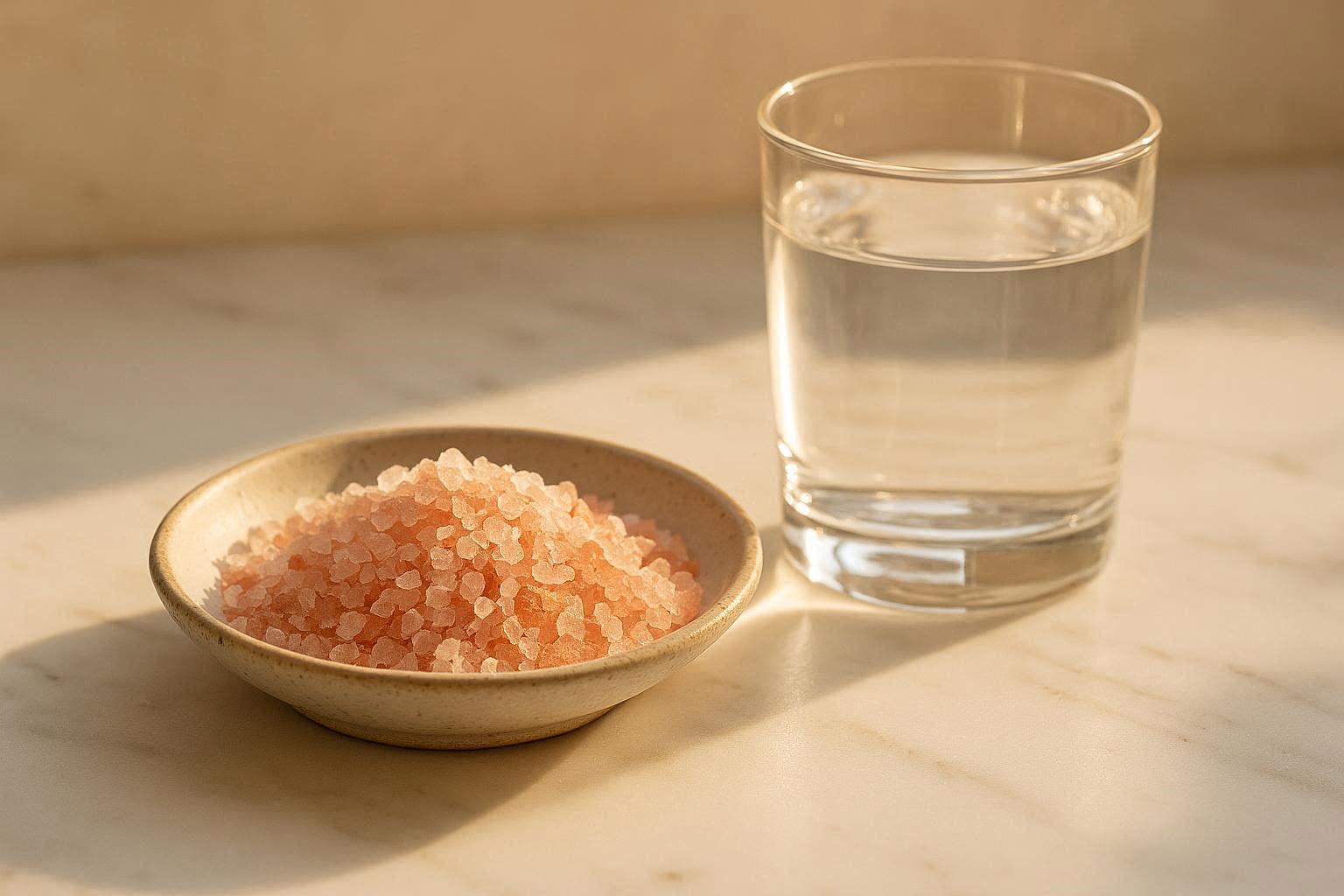
To one litre of filtered or still mineral water, add a very small pinch of unrefined sea salt or Himalayan pink salt — approximately one-eighth of a teaspoon. This is not enough to taste salty. The water should taste clean and perhaps very faintly mineral. Stir until dissolved.
Unrefined salt — not table salt — matters here. Refined table salt is sodium chloride alone. Unrefined sea salt and Himalayan pink salt contain over 80 trace minerals including magnesium, potassium, and calcium. These additional minerals work alongside sodium to support the electrolyte balance that enables cellular water transport.
Why This Works:
Sodium helps retain fluid and supports cellular hydration
Magnesium supports skin barrier function
Potassium balances sodium’s effects
Trace minerals support enzymatic processes in skin cells
Product Recommendation:
I use fine-ground Himalayan pink salt because it dissolves quickly and contains a full spectrum of trace minerals. A single bag lasts 3-4 months at this usage level and costs less than $10.
Affiliate disclosure: The link above is an affiliate link. I only recommend products I personally use and trust.
What to Avoid:
Table salt (iodized, refined — lacks trace minerals)
Epsom salt (magnesium sulfate — not for internal use)
“Detox” salts with additives or anti-caking agents
The Habit — The Hourly Alarm That Changes Everything

The method works. The habit is what makes the method sustainable.
Do not wait until you feel thirsty to drink. Thirst is a late signal — your body’s way of telling you it has already been running below optimal hydration for some time. By the time you feel thirsty, your skin has been showing the effects for the past hour.
Right now, before you close this article, set an alarm on your phone for every hour of your waking day. Label it simply: “Drink — hydration.” When it sounds, drink one glass — approximately 200ml — of your electrolyte water. Not a large amount. Not forced. One consistent glass, every hour.
This maintains even cellular hydration throughout the day rather than the peaks and valleys of drinking large amounts irregularly. The difference is visible within two weeks for most people.
Aim to finish your litre of electrolyte water by approximately 6pm. Reducing fluid intake in the two hours before sleep prevents overnight disruption without compromising daytime hydration.
Signs You’re Properly Hydrated:
Urine is pale yellow (not clear, not dark)
Skin bounces back when gently pinched
Lips stay moist without balm
Energy remains stable through the afternoon
No afternoon headaches
What to Expect — The Honest Timeline
The changes happen in a specific order, and knowing this prevents the most common reason people abandon the protocol: giving up before the visible results arrive.
(adsbygoogle = window.adsbygoogle || []).push({});
Week 1 (Days 1-7): The Adjustment Phase
You may urinate more frequently than usual. This is your kidneys recalibrating to a different electrolyte input. It is temporary and is not a sign that the method is not working. Some people report mild headaches as the body adjusts — this usually resolves within 3-4 days.
Week 2 (Days 8-14): The Energy Shift
Most people notice that energy feels more consistent through the afternoon. The post-lunch energy drop — which is frequently a hydration issue rather than a food or sleep issue — begins to lift. Skin may feel less tight after cleansing.
Week 3 (Days 15-21): The Skin Barrier Improvement
The tight, uncomfortable feeling after cleansing reduces significantly. Moisturiser seems to last longer — a sign that trans-epidermal water loss is decreasing as the skin barrier becomes better supported. Fine lines may appear softer simply because the skin is plumper.
Week 4 (Days 22-28): The Visible Glow
Foundation applies more smoothly and doesn’t settle into lines as quickly. The skin has a quality of light-reflection that topical products alone have never produced — because for the first time, the tissue beneath the surface is properly hydrated. Friends may ask if you’ve changed your skincare routine.
Common Mistakes to Avoid
1. Using Too Much Salt
More is not better. One-eighth of a teaspoon per litre is sufficient. Excess sodium can cause bloating, increased blood pressure, and actually dehydrate you further.
2. Giving Up Too Soon
Cellular hydration takes time. Judging results before week 3 is like planting a seed and digging it up after two days to check if it’s growing.
3. Drinking All Your Water at Once
Chugging a litre in the morning does not equal sipping throughout the day. Your kidneys can only process so much at once. Consistency beats volume.
4. Ignoring Topical Care
Internal hydration is foundational, but it does not replace external care. You still need sunscreen, gentle cleansing, and a good moisturiser. Think of this as building the foundation — the house still needs walls and a roof.
FAQ: How to Hydrate Skin from Inside Naturally

Can I use regular table salt instead of Himalayan salt?
Technically yes, but it’s not ideal. Table salt is refined and contains only sodium chloride, often with anti-caking agents. Himalayan or sea salt contains trace minerals like magnesium and potassium that support the electrolyte balance needed for cellular hydration.
How much salt is too much?
Stick to 1/8 teaspoon per litre of water. The recommended daily sodium intake is 2,300mg (about 1 teaspoon of salt total from all sources). This protocol adds approximately 300-400mg per litre, which is safe for most healthy adults but should be discussed with a doctor if you have hypertension.
Can I add lemon or other flavors?
Yes, a squeeze of fresh lemon adds potassium and vitamin C without interfering with the electrolyte balance. Avoid adding sugar or artificial sweeteners, which can have dehydrating effects.
Will this make me bloated?
Initially, you may retain a small amount of water as your body adjusts — this typically resolves within 5-7 days. If bloating persists, you may be using too much salt or not drinking enough total water.
Can I do this if I’m on a low-sodium diet?
No. If your doctor has prescribed a low-sodium diet for medical reasons, do not add salt to your water without explicit medical approval.
How is this different from sports drinks?
Sports drinks contain high amounts of sugar and artificial ingredients. This protocol provides electrolytes without the blood sugar spike or unnecessary additives.
Conclusion — The Most Important Skin Change Starts at the Glass

I spent years adding products to my external routine trying to solve a problem that was internal. The change that made the most visible difference to my skin cost less than $5 and required only a pinch of salt and a consistent daily habit.
This is not to say skincare products are not valuable — they are, and the right external routine makes a significant difference. But external hydration applied to internally dehydrated skin is like watering a plant that has no roots in the soil. The surface looks attended to. Nothing reaches where it needs to go.
Fix the inside first. The outside follows.
Start today. Mix your first litre. Set your first alarm. Give it four weeks of honest consistency.
Your skin is waiting.
Are you trying this method for the first time? Tell us in the comments what you notice — and at which week. The community of women who have made this change is remarkable, and your experience might be exactly what someone else needs to read.
Have questions about whether this is right for you? Drop a comment with your specific situation, and I’ll do my best to point you in the right direction (though I’ll always remind you to check with your doctor for medical concerns).
You will also find these articles useful:
7 Herbal Teas That Hydrate Your Skin From the Inside Out
Tallow Cream: The Ancient Moisturiser That Is Going Viral — And Deserves To
The Complete Skin Hydration Protocol: Inside and Outside
Health Is What You Have in Your Kitchen: The Beauty Rituals That Cost Almost Nothing
DISCLAIMER Final Medical Reminder: This post is for informational purposes only and does not constitute medical advice. Please consult a qualified healthcare professional before making changes to your health routine, especially if you have existing health conditions, are pregnant, or are taking medication.