


What My Grandmother Knew
My grandmother had extraordinary skin well into her eighties.
She did not have a skincare routine in the modern sense. She had no serums, no acids, no retinol, no elaborate layering system developed from YouTube tutorials and dermatology forums. What she had was a set of daily habits so simple and so consistent that they were almost invisible — the kind of habits that get overlooked precisely because they require nothing complicated or expensive.
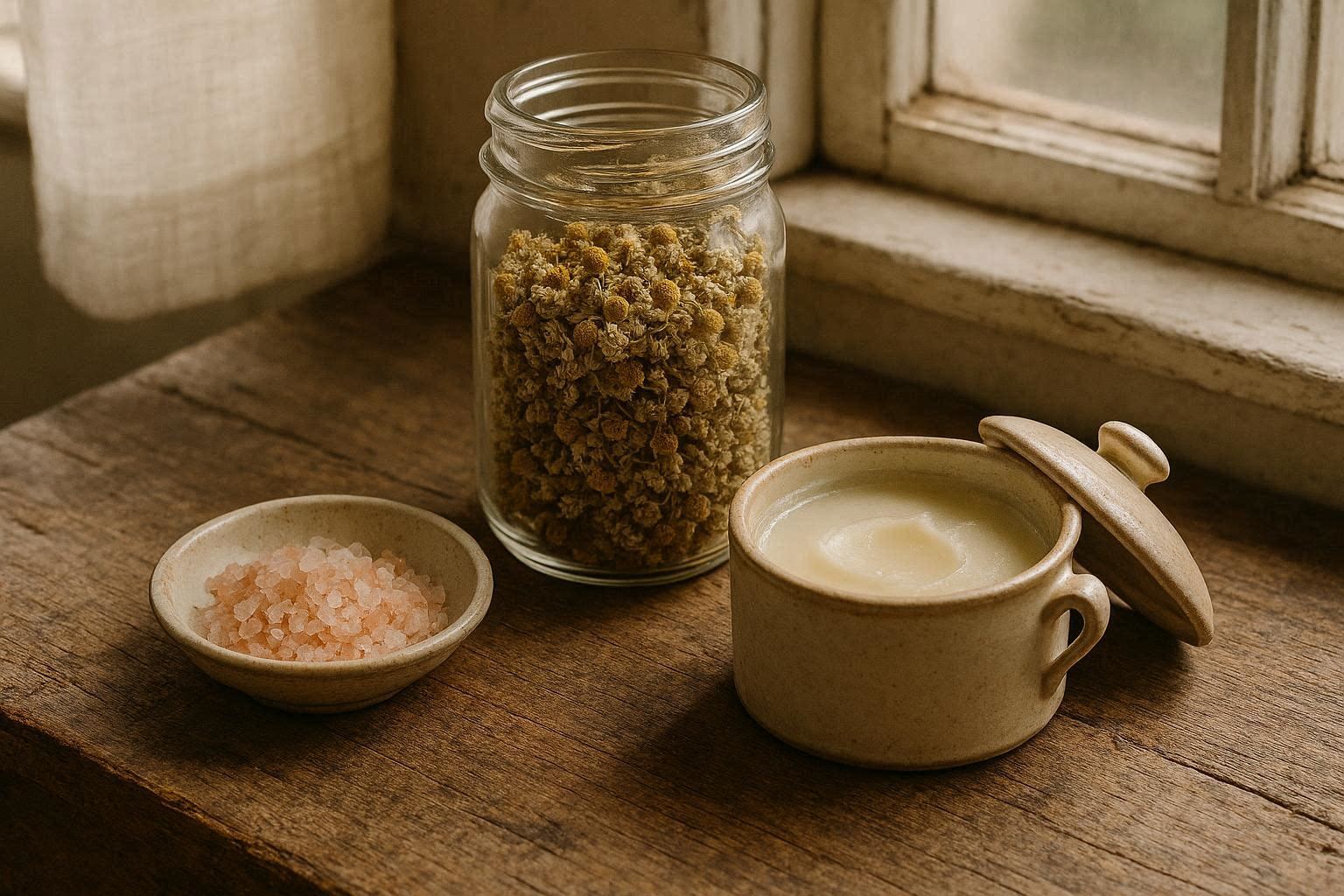
She drank a glass of salted water every morning. She made chamomile tea from dried flowers she kept in a jar. She kept a small pot of rendered fat — what we now call tallow balm — that she applied to her face and hands before bed. She soaked her feet in warm salt water on evenings when she had been on them all day.
She ate whole foods, slept consistently, moved daily, and paid very little attention to the beauty industry’s constant suggestion that she was missing something.
I spent a significant portion of my thirties missing things. Expensive things. Things that arrived in elegant packaging and promised transformation. Some were genuinely effective. Many were not. And none produced the sustained, healthy glow that my grandmother’s simple kitchen habits had maintained over decades.
This article is what I have learned from recreating her approach — and what modern science has helped me understand about why these natural beauty rituals at home actually work.
Salt — The Mineral Foundation Your Skin Actually Needs

Unrefined sea salt or Himalayan pink salt is not just a cooking ingredient. It is a concentrated source of over 80 trace minerals that your body relies on for cellular hydration, nerve function, enzyme activity, and skin barrier maintenance.
The Internal Practice: One-eighth of a teaspoon of unrefined salt dissolved in one litre of filtered water, consumed steadily throughout the day. This provides the electrolyte foundation for osmotic balance — the physiological mechanism that pulls water into your cells rather than letting it pass through and be excreted. Research in clinical nutrition confirms that adequate sodium and trace mineral intake significantly improves cellular hydration efficiency, which directly correlates with skin turgor, elasticity, and the reduction of fine dehydration lines.
The External Practice: Two tablespoons of fine sea salt mixed with one tablespoon of extra virgin olive oil, used as a gentle body scrub once or twice weekly. Applied to damp skin in slow, upward circles, it provides mild mechanical exfoliation while delivering minerals and lipids to the stratum corneum. The result is skin that feels genuinely nourished, not just temporarily smoothed by harsh physical exfoliants.
Important Note: Always use unrefined salt. Refined table salt is stripped of trace minerals and often contains anti-caking agents that offer no physiological benefit. If you have hypertension, kidney disease, or are on sodium-restricted medication, consult your physician before adding salt to drinking water.
Herbal Teas — The Bioactive Window

Three cups of herbal tea daily provides three distinct windows of internal skincare that no topical product can replicate. Because these compounds enter the bloodstream, they reach the dermis and subcutaneous tissue — layers where collagen, elastin, and microcirculation live.
Morning: Green or rooibos tea for antioxidant protection. EGCG (epigallocatechin gallate) in green tea has documented photoprotective and anti-inflammatory properties. Rooibos contains aspalathin, a unique polyphenol that neutralises free radicals and supports lipid balance. Brew green tea at 75°C, not boiling, to preserve catechin integrity.
Midday: Peppermint or nettle for mineral replenishment and digestive modulation. The gut-skin axis is well-established in dermatological literature. Nettle delivers silica, potassium, and magnesium, while peppermint supports bile flow and reduces intestinal inflammation. Improved digestion consistently correlates with fewer reactive breakouts and clearer skin tone over time.
Evening: Chamomile for systemic calming and sleep optimisation. Sleep is the most powerful recovery window for skin. During deep rest, barrier lipids are synthesised, cellular turnover accelerates, and daytime inflammation is resolved. Chamomile’s apigenin gently downregulates cortisol production, creating the physiological environment where repair actually occurs.
Hot in winter, iced in summer — the bioactive profile remains equivalent either way. Consistency matters more than temperature.
Tallow — The Ancestral Moisturiser

Rendered grass-fed beef fat was my grandmother’s night cream. It is also one of the most scientifically coherent moisturisers available. Its fatty acid composition closely mirrors human sebum: approximately 45% oleic acid, 25% palmitic acid, and meaningful amounts of stearic acid. This structural similarity allows it to integrate with your skin’s lipid matrix rather than sitting on top of it like synthetic emulsifiers or heavy silicones.
Grass-fed tallow also naturally contains fat-soluble vitamins A, D, E, and K in highly bioavailable forms. Vitamin A supports cellular turnover and collagen maintenance. Vitamin E provides lipid-soluble antioxidant protection. Vitamin K supports microcirculation and reduces the appearance of vascular discolouration. Research in lipid dermatology confirms that biocompatible, unrefined animal fats applied before sleep can reduce transepidermal water loss by up to 40% compared to conventional lotions.
How to Use It Correctly: Apply a pea-sized amount to clean, slightly damp skin as the final step of your evening routine. Warm it between your fingertips for 10 seconds until it softens, then press gently into the skin. It absorbs within minutes and leaves a soft, non-greasy finish that supports overnight barrier reconstruction.
For those who avoid animal products, plant-based alternatives like squalane or high-quality shea butter offer similar occlusive benefits, though they do not replicate the complete fat-soluble vitamin profile of grass-fed tallow.
The Foot Bath — The Forgotten Nervous System Reset

This is the practice most people dismiss and later cannot imagine living without.
Fill a basin with comfortably warm water. Add two tablespoons of coarse sea salt. Soak for 15 minutes before bed.
The physiological effect is immediate and measurable. Warm water increases peripheral circulation in the feet and lower legs. This draws blood away from the core, triggering a natural drop in core body temperature. That temperature drop is one of the primary biological signals your brain uses to initiate sleep onset. Cortisol decreases. Parasympathetic nervous system activity increases. The quality of sleep that follows is consistently deeper and more restorative.
Better sleep is the most powerful beauty intervention available. It cannot be replicated by any serum, device, or treatment. The foot bath costs the price of a pinch of salt and fifteen minutes of stillness, yet it addresses the root cause of so many skin concerns: chronic stress, elevated cortisol, and fragmented recovery cycles.
Why Consistency Beats Complexity

The beauty industry’s message is that you are always missing something — a new ingredient, a new technology, a new system that will produce the result all previous purchases have not.
The reality of skin physiology is different. Skin responds to steady, predictable inputs. When you disrupt it daily with new acids, changing routines, or inconsistent hydration, it stays in reactive survival mode. When you provide the same foundational support daily — proper electrolytes, targeted botanicals, biocompatible lipids, and quality sleep — it shifts into regeneration mode.
These natural beauty rituals at home work not because they are magical, but because they are sustainable. They fit into real life. They cost less than $30 per month combined. They require no special equipment, no complicated technique, and no degree in dermatology. They have been practised across cultures and centuries because they align with human biology, not marketing trends.
Who Should Adjust These Practices
While these rituals are gentle and widely beneficial, individual physiology varies:
Hypertension or kidney concerns: Consult a doctor before adding salt to drinking water or using high-mineral soaks.
Acne-prone or oily skin: Start with a rice-grain amount of tallow focused only on dry zones. If oleic acid triggers congestion, switch to a lightweight ceramide gel-cream.
Pregnancy or nursing: Verify herbal safety with your OB-GYN. Hibiscus and high-dose nettle are often restricted during pregnancy; stick to green tea, chamomile, and rooibos in moderation.
Eczema or active dermatitis: Patch-test all topicals. Avoid salt scrubs on compromised or broken skin until the barrier has healed.
When in doubt, introduce one practice at a time. Monitor your skin’s response for 14 days before adding another.
FAQ: Natural Beauty Rituals at Home

How long until I see visible results from these habits?
Most people notice improved energy, steadier hydration, and reduced tightness within 7–10 days. Visible improvements in skin texture, light reflection, and makeup adherence typically appear between weeks 2 and 4. Collagen-related firmness and sleep-quality benefits continue compounding through weeks 6–8.
Can I do the salt-water routine if I drink a lot of coffee?
Yes. For every cup of coffee beyond one, add an extra 200ml glass of electrolyte water. Caffeine increases urinary output, which can disrupt steady cellular hydration if left unbalanced.
Do I really need to add salt to my water for skin hydration?
Plain water hydrates temporarily but often passes through the system quickly. Electrolytes create the osmotic gradient that pulls water into cells. A tiny pinch (1/8 tsp per litre) is enough to trigger absorption without making the water taste salty or dangerously increasing sodium intake for most healthy adults.
Can I swap herbal teas for vitamin supplements?
Whole teas provide polyphenols, trace minerals, and gentle fibre that work synergistically. Isolated supplements lack the full botanical matrix and can sometimes cause digestive upset. If you prefer capsules, choose food-sourced antioxidants, but expect slower, less systemic results than consistent tea consumption.
What if tallow makes my skin feel greasy?
You may be using too much or applying it to already-hydrated zones. Use less than a pea, press it only where dry, and ensure your serum is fully absorbed first. Combination or oily skin often benefits from applying tallow only to the cheeks and neck, using a lighter moisturiser on the T-zone.
Are these practices safe for teenagers?
Yes, in simplified form. Focus on consistent hydration, gentle cleansing, daily SPF, and a lightweight moisturiser. Heavy occlusives like tallow and concentrated mineral soaks are rarely needed for younger skin unless experiencing clinical dryness or barrier damage from over-exfoliation.
Conclusion — The Simplest Things, Done Consistently

The beauty industry’s message is that you are always missing something. My grandmother’s daily habits expressed a different truth: consistency with simple things produces results that no complicated system can match.
Salt water, hourly. Three cups of herbal tea, daily. Tallow cream, every evening. A foot bath, several times a week.
These practices cost almost nothing. They require no special equipment, no complicated technique, and no knowledge beyond what this guide provides. They are also, I have come to appreciate, an act of care. Not the frantic, seeking-the-next-thing kind of care. The quiet, consistent, this-is-what-I-do kind — the kind that produces a face, in thirty years, that someone might look at and ask what you’ve been doing.
The answer will be simple. Because simple is what works.
Which of these natural beauty rituals at home are you starting with? Tell us in the comments — and come back in thirty days to share what you noticed.
You Might Also Enjoy:
How to Hydrate Skin from Inside Naturally: The Salt-Water Method That Actually Works
7 Herbal Teas That Hydrate Your Skin From the Inside
Tallow Cream: The Ancient Moisturiser That My Dermatologist Noticed
The Complete Inside-Out Hydration Protocol
(Informational purposes only — not medical advice.)
⚠️ Medical Disclaimer: I am not a dermatologist, physician, or licensed nutritionist. This article shares personal experience and reviews established research on skin physiology and natural skincare practices. Natural beauty rituals at home are not a substitute for prescribed medical treatments. Always consult a qualified healthcare provider before starting new internal or topical routines, especially if you have kidney, heart, blood pressure, or hormonal conditions, or if you are pregnant or nursing.
Disclosure: THE CHIC STYLE LOOK is a participant in the Amazon Associates Program and also shares Shein affiliate links. As an Amazon Associate, we earn from qualifying purchases. We may also earn commissions from Shein links — all at no extra cost to you. Thank you for supporting our work.