
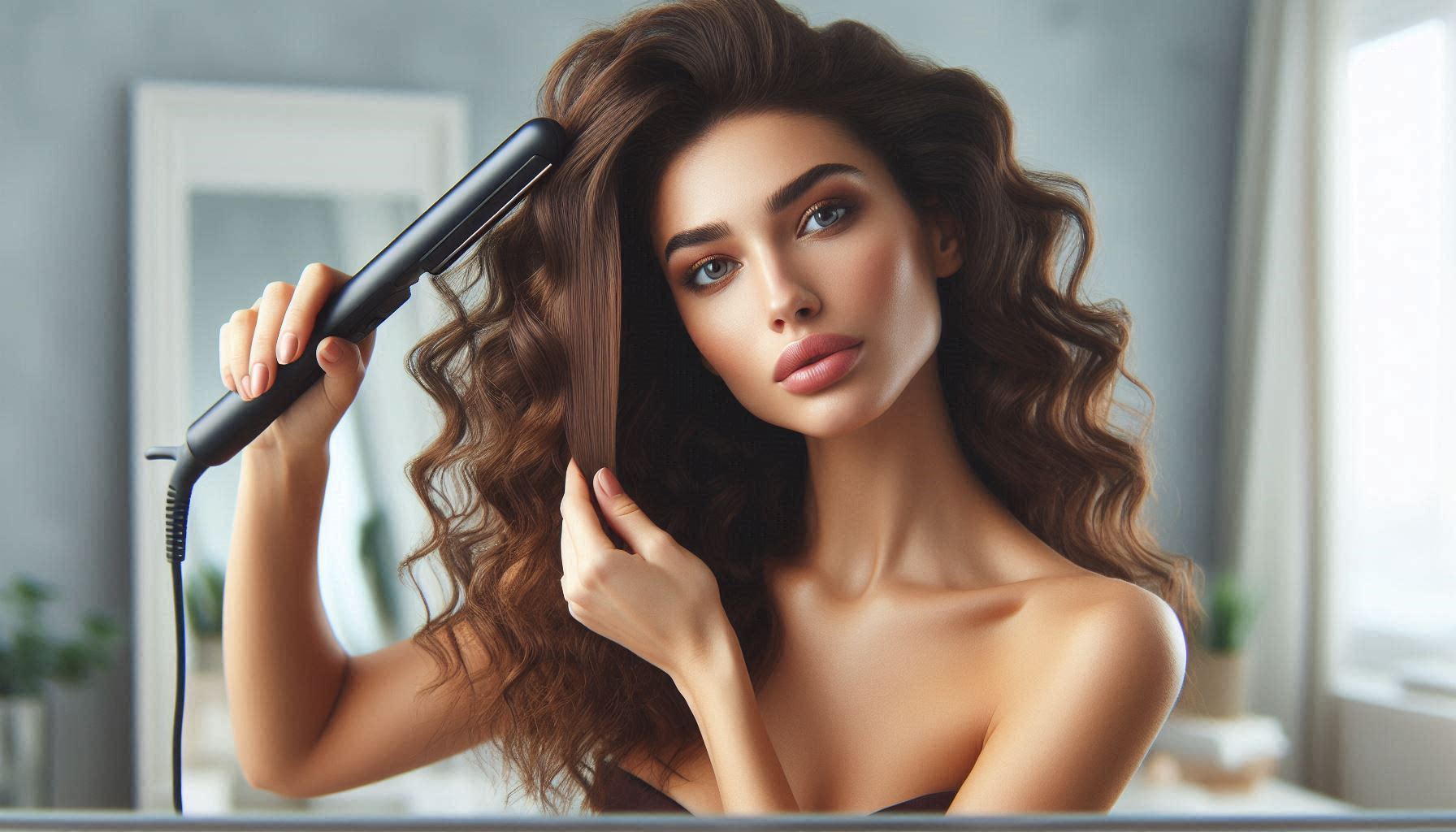

Have you ever dreamt of rocking sleek, straight styles but worried about sacrificing your beautiful curls? You’re not alone! Countless curly-haired individuals face this dilemma. The good news is, achieving straight hair is possible without compromising curl health. This guide is your ultimate companion, packed with relatable tips, tricks, and problem-solving solutions to help you create stunning straight styles while prioritizing healthy, vibrant curls.
Cracking the Curl Code: Unveiling Your Hair Type:
Understanding your curl pattern is the first step to a successful straightening journey. Think of it like a fingerprint – unique to you! Embrace those curls, learn their language, and unlock the secrets to healthy manipulation.
-
Fun Fact: Did you know curly hair comes in a stunning spectrum? From loose waves (2A-2C) to kinky coils (4A-4C), there’s a curl pattern for everyone!
-
Relatable Tip: Take an online quiz or consult your hairstylist to identify your specific curl type (2A-4C). Knowing your curl pattern helps you choose the gentlest straightening methods and styling products for optimal results. Here’s a deeper dive into common curl patterns:
-
Type 2 (Wavy): Loose to defined waves that may hold a curl with styling products.
- Tip: Experiment with a variety of leave-in conditioners and curl creams formulated for wavy hair. Explore different application techniques – scrunching for more definition, raking for looser waves, or finger coiling for specific curl shapes.
- Trick: Diffuse damp hair on a low heat setting with the diffuser attachment pointed upwards to encourage waves to form without frizz. Play with the diffuser’s distance from your hair and adjust the air flow settings to find what works best for your curl pattern.
- Problem-Solving: Wavy hair can sometimes be prone to frizz, especially in humid environments. Look for styling products with humidity-resistant ingredients and consider incorporating a frizz-control serum into your routine.
-
Type 3 (Curly): Tight curls with a springy or corkscrew formation.
- Hack: Deep conditioning treatments are your best friend! Regularly pamper your curls with DIY masks or store-bought products specifically formulated for curly hair. These treatments replenish moisture loss and strengthen your hair, making it more resilient to heat styling and manipulation.
- Problem-Solving: Detangling can be a challenge for curly hair, especially before straightening. Here are some tips for minimizing breakage:
- Apply a generous amount of leave-in conditioner specifically formulated for curly hair to damp hair.
- Use a wide-tooth comb specifically designed for detangling curly hair.
- Start detangling at the ends and gently work your way up to the roots in small sections to avoid pulling.
- Consider using a detangling spray for added slip and reduced friction.
-
Type 4 (Coily): Dense, kinky coils that often grow in a Z-shaped pattern.
- Tip: Look for products specifically formulated for coily hair, which are often richer and more moisturizing to address dryness, a common challenge for this curl type. Ingredients like shea butter, coconut oil, and avocado oil are particularly beneficial for coily hair.
- Trick: The “bantu knot” method is a great heat-free straightening technique for coily hair. Divide damp hair into small sections and twist each section into a knot, securing it with a bobby pin. Let the knots dry completely, then unravel for looser curls or straighter strands. You can experiment with different knot sizes to achieve varying degrees of straightness.
-
The Moisture Mission: Prepping Your Curls for Transformation:
Healthy, hydrated curls are the key to achieving smooth, frizz-free straight styles. Here’s how to prep your hair for a successful straightening session and minimize the risk of damage.
-
DIY Deep Conditioning Recipe (Optional): Whip up a nourishing deep conditioner using ingredients from your kitchen! Mix ripe avocado with honey and yogurt for a moisture-boosting mask that will leave your curls feeling soft and manageable. Apply the mask generously to damp hair, cover with a shower cap for 20-30 minutes, then rinse thoroughly.
- General Hair Care Tip: Consider consulting a trichologist (a hair and scalp specialist) for personalized hair care advice based on your specific hair type and needs.
-
Gentle Cleansing Matters: Ditch harsh shampoos with sulfates! Opt for a gentle, sulfate-free formula that cleanses your scalp without stripping away natural oils essential for healthy hair. Look for a shampoo specifically formulated
-
-
Gentle Cleansing Matters (continued): Look for a shampoo specifically formulated for curly hair, which often contain ingredients that add moisture and definition.
- Pro Tip: Consider a co-washing routine! Co-washing involves cleansing your hair with conditioner instead of shampoo. This method gently cleanses the scalp while preserving the natural oils that keep your curls hydrated and defined. Experiment with different co-washing conditioners to find one that works best for your hair type.
-
Pre-Straightening Powerhouse: Leave-in conditioners are your secret weapon for adding moisture and detangling before straightening. Apply a leave-in conditioner formulated for your curl type to damp hair and comb through for even distribution.
- Problem-Solving: If your hair feels weighed down by leave-in conditioners, opt for a lightweight leave-in spray or milk. These products provide hydration without the heavy build-up that can make your hair limp.
-

https://cdn.pixabay.com/photo/2012/02/23/09/12/beauty-15932_1280.jpg

Heat Styling Savvy: Mastering the Straightener (if using heat):
Heat styling tools can be effective for achieving straight hair, but using them correctly is crucial to avoid heat damage. Here’s how to become a heat styling pro and unlock the secrets of safe straightening (if you choose to use heat)!
-
Temperature Talk: Don’t crank up the heat! Start with a low heat setting (around 300°F for fine hair, 350°F for medium hair, and 400°F for coarse hair) and increase it gradually only if necessary. High heat settings are not only damaging but often unnecessary for achieving straight results.
- Trick: Invest in a flat iron with adjustable heat settings and a digital temperature display. This allows you to precisely control the heat and minimize the risk of overheating your hair.
-
Sectioning is Key: Divide your hair into manageable sections (around 1-2 inches thick) to ensure even heat distribution and prevent overheating any one area. Clip each section up as you style for a more organized approach.
- Time Management Trick: Work from the bottom sections towards the top of your head. This ensures the most heat-resistant (bottom layers) are straightened first, and the more fragile top layers are exposed to heat for a shorter duration.
-
Heat Protectant Hero: Apply a heat protectant spray liberally and evenly throughout your damp hair before using any heat styling tool. This creates a barrier that shields your hair from heat damage, reducing split ends, frizz, and breakage.
- Product Spotlight: Look for heat protectant sprays formulated with ingredients like silicones, ceramides, and panthenol. These ingredients not only protect your hair from heat but also add shine and manageability.
The Heat-Free Haven: Embracing Straight Styles Without Heat:
Skip the heat altogether and explore innovative heat-free techniques for achieving temporary straightening effects. These methods utilize clever hair manipulation to transform your curls for a versatile look.
-
The Braid-Out: This classic technique involves braiding damp hair into sections and letting it dry completely. Unravel the braids for looser waves or straighter strands, depending on the braid size and tightness.
- Hack: Experiment with different braiding techniques like cornrows, French braids, or fishtail braids to achieve varying degrees of straightness and add visual interest to your hairstyle.
- Problem-Solving: If your hair tends to frizz after braid-outs, apply a leave-in conditioner with frizz-control properties before braiding. You can also use a satin or silk pillowcase to minimize friction while you sleep, which can help reduce frizz.
-
The Plop Method: Gently squeeze excess water from freshly washed hair and apply a leave-in conditioner specifically formulated for curly hair. Flip your head over and use a microfiber towel or cotton t-shirt to “plop” your hair on top of your head. The microfiber material absorbs excess moisture while encouraging the hair to dry in a straighter pattern.
- Tip: For best results, plop your hair for at least 30 minutes to an hour, or until most of the moisture is absorbed. You can air dry completely or use a diffuser on a low heat setting for the final touches.
- Trick: If you don’t have a microfiber towel, an old cotton t-shirt works too! Just make sure it’s made from a soft, absorbent material that won’t snag your hair.
The Curl Crisis Counsellor: Troubleshooting Common Straightening Struggles:
Even the most curl-savvy individuals encounter challenges. Here are some common straightening struggles and solutions to get you back on track:
-
Problem: My hair looks frizzy after straightening.
- Solution: Dryness and lack of moisture are the main culprits behind frizz. Here’s a multi-pronged attack:
- Pre-Straightening Moisture Boost: Apply a leave-in conditioner specifically formulated for curly hair before straightening. Look for ingredients like shea butter or coconut oil that provide intense hydration.
- Heat Protectant Power: Don’t skip the heat protectant spray! It creates a barrier that shields your hair from heat damage, which can contribute to frizz.
- Post-Straightening TLC: After straightening, use a frizz-control serum to smooth flyaways and lock in moisture.
- Diffuser Drying (Optional): If you use a blow dryer to straighten, attach a diffuser to distribute airflow evenly and minimize frizz.
- Solution: Dryness and lack of moisture are the main culprits behind frizz. Here’s a multi-pronged attack:
-
Problem: My straightened hair lacks volume and falls flat.
- Solution: Adding volume to straightened hair requires strategic techniques:
- Root Lifting Spray: Apply a root-lifting spray to damp hair at the roots before blow drying (if using heat) or air drying. This creates lift and prevents hair from falling flat.
- Haircut Magic: Consider a haircut with layers. Layers add natural volume and movement to straight styles.
- The Clip Trick: While hair is still warm from straightening, use hair clips to secure small sections at the roots for a few minutes. This helps hair cool in a lifted position.
- Solution: Adding volume to straightened hair requires strategic techniques:
The Curl Cocktail Connoisseur: Unveiling the Curly-to-Straight Product Arsenal:
Now that you’ve mastered the art of straightening your curls safely (if using heat) or with heat-free techniques, let’s explore the essential products to keep your hair healthy and stylish throughout the process.
- Sulfate-Free Shampoo: This gentle cleanser removes dirt and buildup without stripping away natural oils, keeping your curls hydrated and manageable.
- Deep Conditioner: Deep condition your hair regularly (at least once a week) with a rich mask or oil treatment to replenish moisture and strengthen hair, especially before and after heat styling.
- Leave-in Conditioner: This is your BFF for curly hair, both before and after straightening. It provides hydration, detangles, and helps prevent frizz. Look for lightweight formulas for looser curl patterns and richer formulas for coily hair.
- Heat Protectant Spray (if using heat): Apply this shield before using any heat styling tools to minimize heat damage and protect your hair’s integrity.
- Frizz-Control Serum: A godsend for taming frizz after straightening. Look for serums formulated with ingredients like argan oil or shea butter to smooth flyaways and add shine.
- Detangling Spray: This helps detangle your curls gently before straightening, minimizing breakage.
Beyond Straightening: Celebrating Your Curl Versatility
Straightening your hair can be a fun way to switch up your look, but don’t forget to embrace your natural curls! Here are some tips for loving and caring for your curly hair:
- Embrace Your Curl Pattern: Every curl pattern is unique and beautiful! Learn to love your natural texture and rock your curls with confidence.
- Develop a Consistent Routine: Having a regular hair care routine that addresses your curl pattern’s specific needs is essential for healthy, manageable curls. Consult a hairstylist for personalized recommendations.
- Deep Conditioning is Key: Regularly pamper your curls with deep conditioning treatments to keep them hydrated and prevent breakage.
- Satin or Silk Pillowcase: Swap your cotton pillowcase for a satin or silk one. These materials create less friction, which can help reduce frizz and breakage, especially for curly hair.

The Curl Maintenance Master: Keeping Your Hair Healthy
Maintaining healthy hair is crucial, whether you straighten your curls or wear them naturally. Here are some additional tips to keep your hair looking and feeling its best:
- Trim Regularly: Split ends can travel up the hair shaft, making your hair look straggly and unhealthy. Schedule regular trims (every 6-8 weeks) to remove split ends and keep your hair healthy.
- Hydration is Key: Curly hair is inherently drier than straight hair. Drink plenty of water throughout the day to stay hydrated from the inside out. You can also use hydrating hair masks and leave-in conditioners to replenish moisture from the outside.
- Minimize Heat Styling: While occasional straightening is perfectly fine, try to minimize heat styling as much as possible. Let your curls air dry whenever possible and opt for heat-free straightening techniques whenever you can.
- Satin/Silk Love: Incorporate satin or silk into your hair care routine beyond just pillowcases. Look for satin or silk hair scarves or scrunchies to tie up your hair to minimize friction and breakage.
- Protective Styles: Protective styles like braids, twists, and bantu knots are a great way to give your curls a break from styling and manipulation while promoting healthy hair growth.
Conclusion: Your Curls, Your Confidence
You Might Also Enjoy:
The 4-Minute Mirror-Shine Hack: How to Restore Hair Shine Naturally at Home
Essential Oils for Skin and Beauty: The Complete Beginner’s Guide to Aromatherapy & Massage
Modern Shag Haircut: Why This Layered Trend Is Transforming Hair in 2026
How to Style Birkin Bangs: The Breakout Haircut of Spring 2026
How Do I Make My Hair Grow Faster? Everything I Tried — and the 4 Things That Actually Worked