
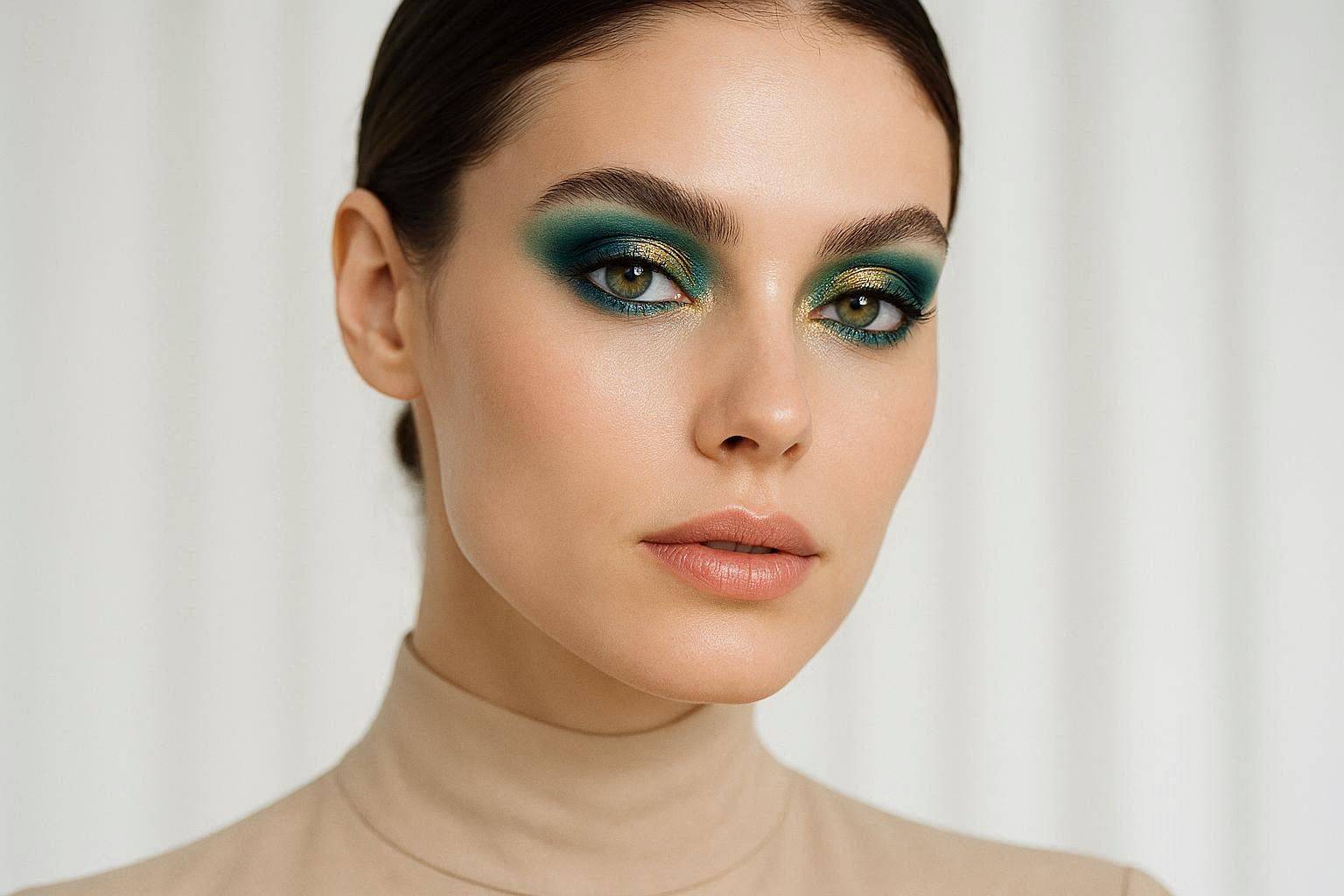
Moving Beyond Neutral Palettes
Color in eye makeup has shifted from seasonal trend to intentional styling choice. Rather than relying solely on neutral, earth-toned bases, many are experimenting with saturated pigments, metallic finishes, and high-contrast placement to create defined, camera-ready looks that hold up under varied lighting.
The key to successful color application is not simply choosing brighter shades, but understanding placement, undertone compatibility, and product formulation. When applied with deliberate technique, vibrant eye makeup can enhance facial structure, complement skin undertones, and provide consistent wear throughout the day. This guide outlines seven structured looks, application methods, and adaptation strategies to help you build color with precision and longevity.
Look 1: Copper and Amber Satin
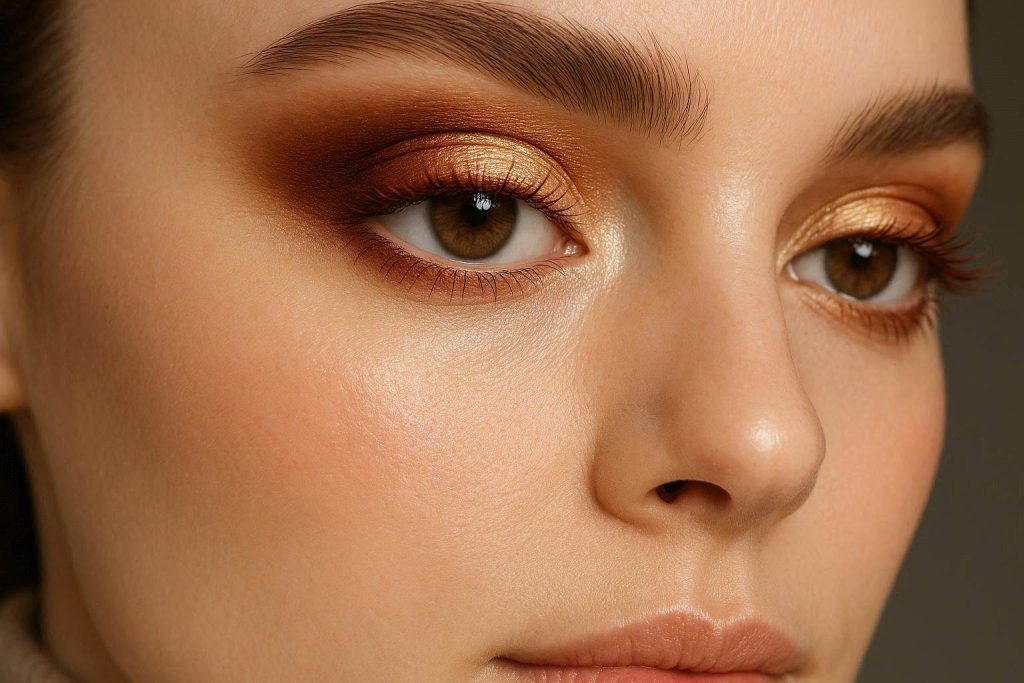
Press deep copper pigment into the outer corner and crease area. Sweep warm amber satin across the center of the mobile lid. Tap pale champagne gold onto the inner corner using a fingertip for smooth metallic deposition. Draw a thin line of burnt sienna along the lower lash line and finish with copper-toned mascara.
This combination works across most undertones. On warm or olive skin, the copper enhances natural warmth. On cool undertones, the amber satin provides contrast without overwhelming the complexion.
Application Note: Use a flat synthetic brush to press copper into the outer third. Blend only the crease transition to maintain sharp outer definition.
Look 2: Porcelain Base with Teal Accent
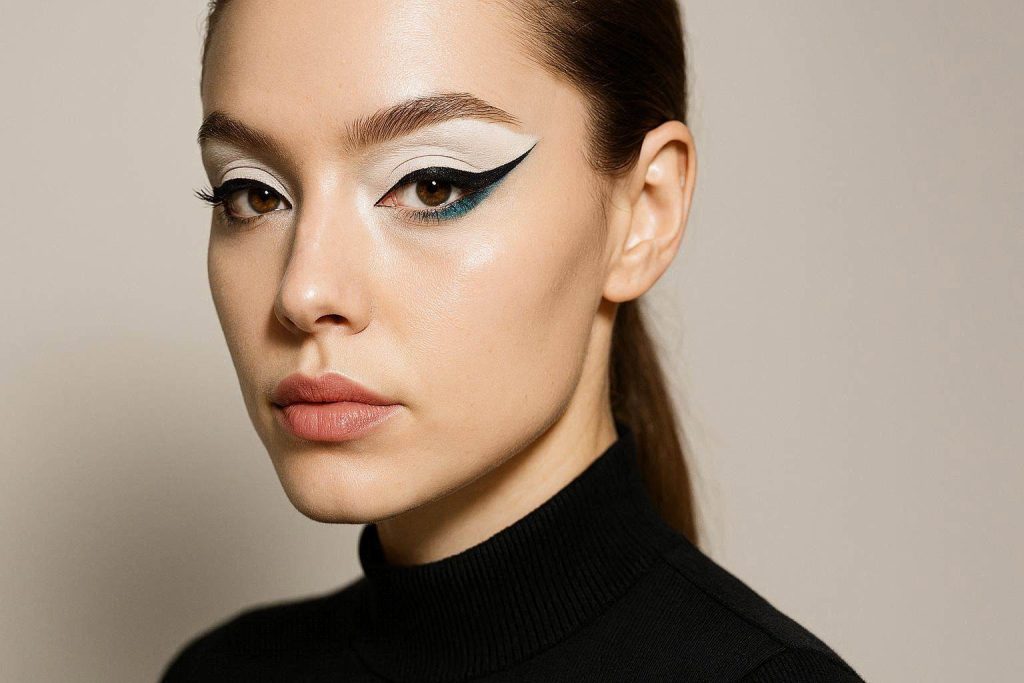
Apply white cream shadow from the lash line to the brow bone in an even layer. Line the upper lash line with black gel liner, extending into a clean, precise wing. Press deep teal pigment into the outer corner only, stopping cleanly at the outer edge without blending into the white base.
The contrast between the light base and saturated outer accent creates structured dimension. This look performs well in bright lighting and photographs clearly without harsh shadow lines.
Application Note: Set the white cream base with a translucent powder before applying teal pigment to prevent shifting or creasing.
Look 3: Strawberry and Raspberry Depth
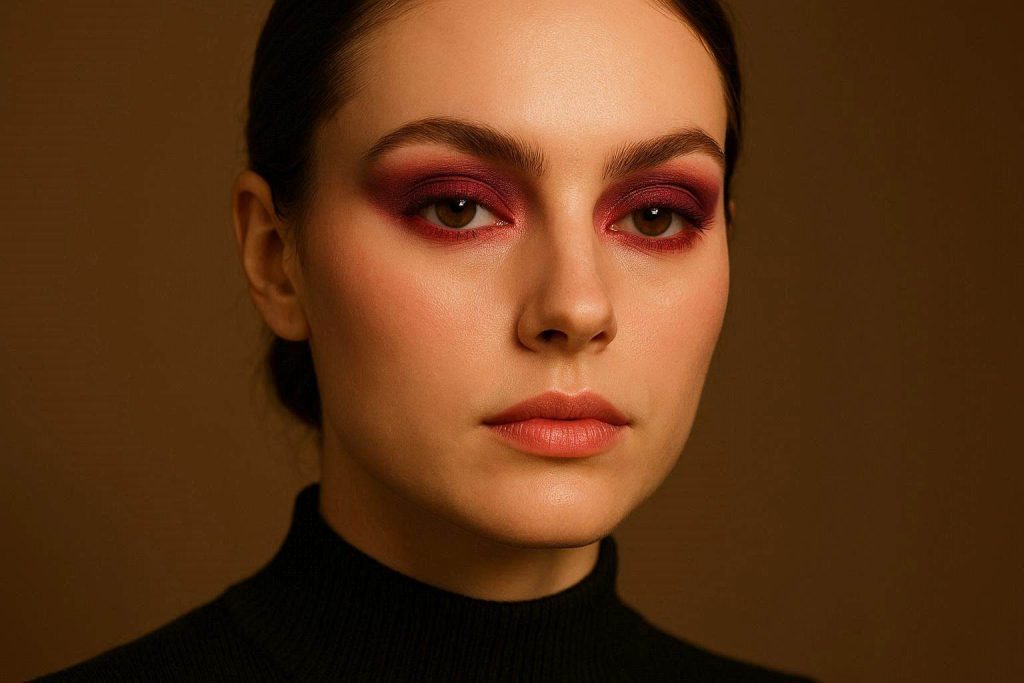
Press deep strawberry matte shadow across the full mobile lid. Blend raspberry-purple into the crease and outer corner using small circular motions until the transition appears smooth. Apply pale rose pink beneath the brow bone. Diffuse a light wash of strawberry red below the lower lash line using a tapered brush for soft diffusion.
This layered approach builds depth while maintaining a cohesive color story. It works well for medium to deep skin tones and complements both warm and neutral undertones.
Application Note: Apply the darkest shade first to establish depth, then layer lighter shades outward to prevent muddiness.
Look 4: Grey-Blue Base with Violet Highlight
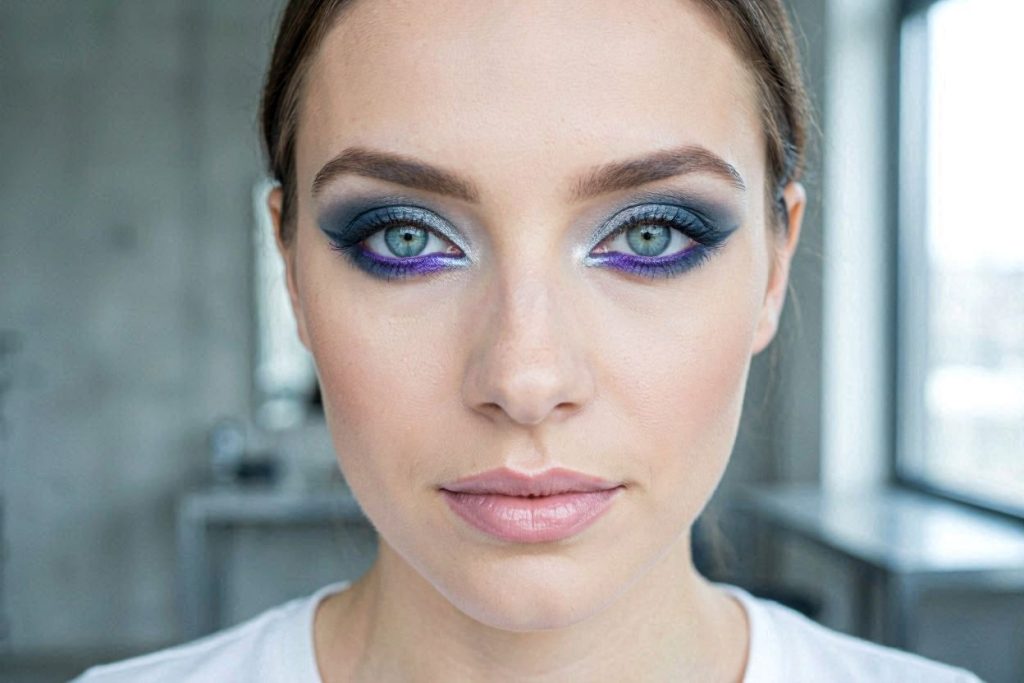
Apply stormy grey-blue matte shadow across the full lid. Deepen the outer corner and crease with charcoal pigment. Press electric violet onto the center of the lid and inner corner. Line both upper and lower lash lines with silver metallic liner, pressing close to the lash base.
The cool grey-blue base allows the violet to stand out without competing for attention. The silver liner adds reflective contrast that reads clearly in daylight and indoor lighting.
Application Note: Use a dense pencil brush for the silver liner to ensure precise placement and prevent smudging into the violet base.
Look 5: Terracotta with Midnight Blue Line
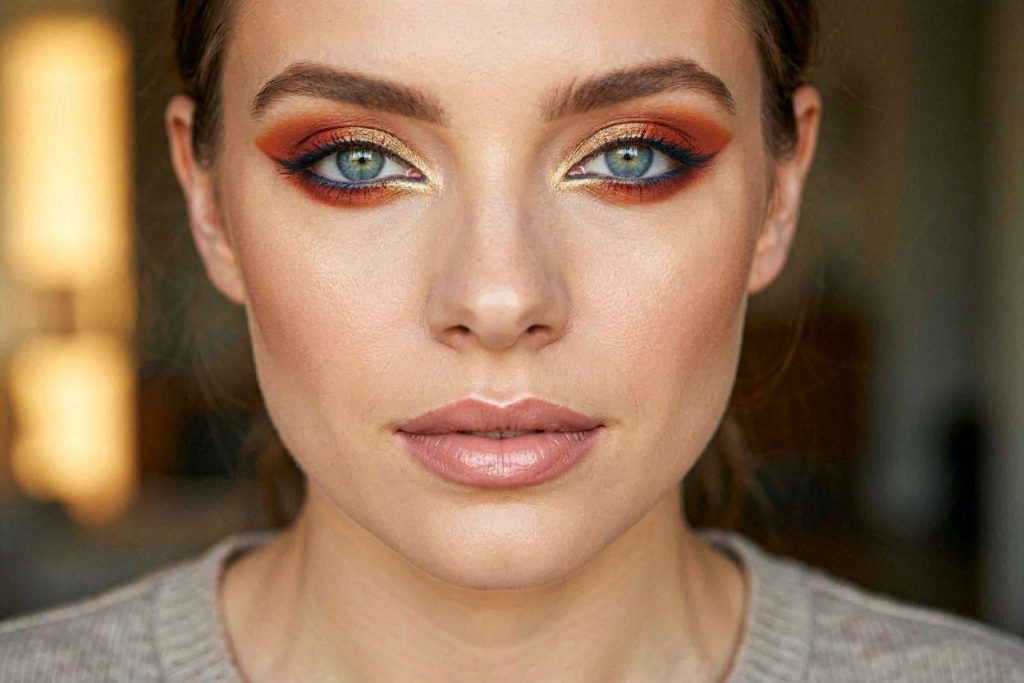
Layer rich terracotta matte across the entire lid in two pressed coats. Blend burnt orange into the crease until the transition between shades is smooth. Press antique gold metallic pigment onto the center of the lid using a fingertip. Draw midnight blue liner along the upper lash line only, keeping it thin and close to the lashes.
The cool blue line creates visual contrast against the warm terracotta base, adding structure without heavy contouring. This combination adapts well to both daytime and evening settings.
Application Note: Use a liquid liner with a fine brush tip for the blue line to ensure sharp edges and consistent pigment deposition.
Look 6: Violet Base with Iridescent Layer
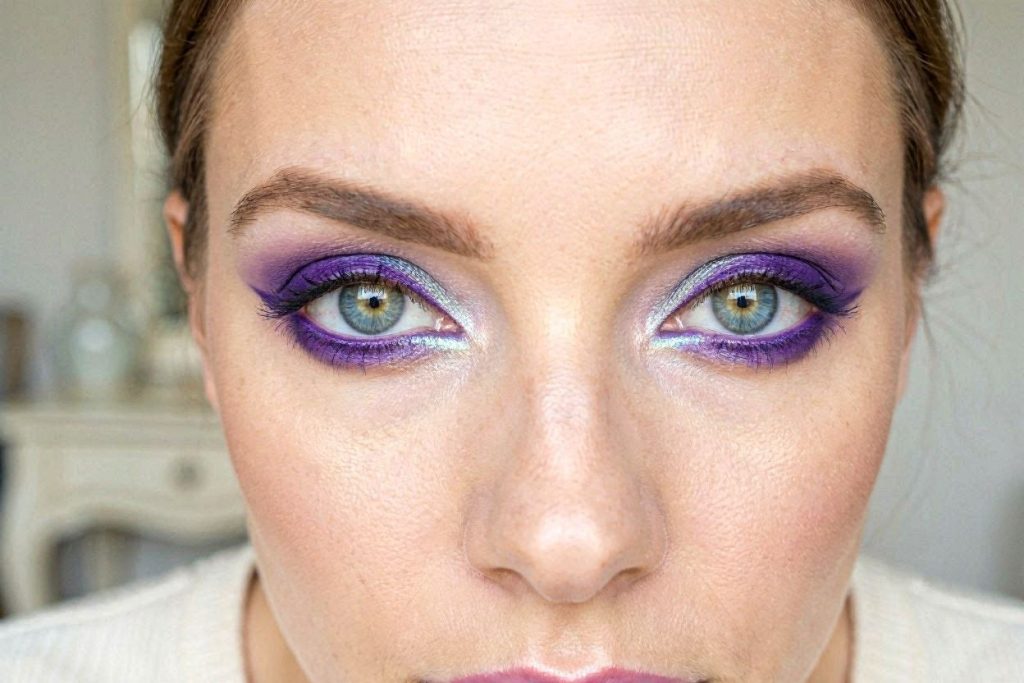
Press deep violet matte across the full lid. Deepen the outer corner and crease with grape purple. Press iridescent white or holographic silver pigment directly over the center of the lid, layering over the violet base. Apply pale lavender beneath the brow bone and along the lower lash line. Add violet liner to the waterline for added depth.
The layered iridescence over matte violet creates multi-dimensional light reflection. This look performs best in environments with varied lighting, where the metallic shift remains visible throughout the day.
Application Note: Apply the iridescent pigment with a flat fingertip or damp sponge brush to maximize metallic payoff without disturbing the matte base.
Look 7: Tangerine with Chrome Accent
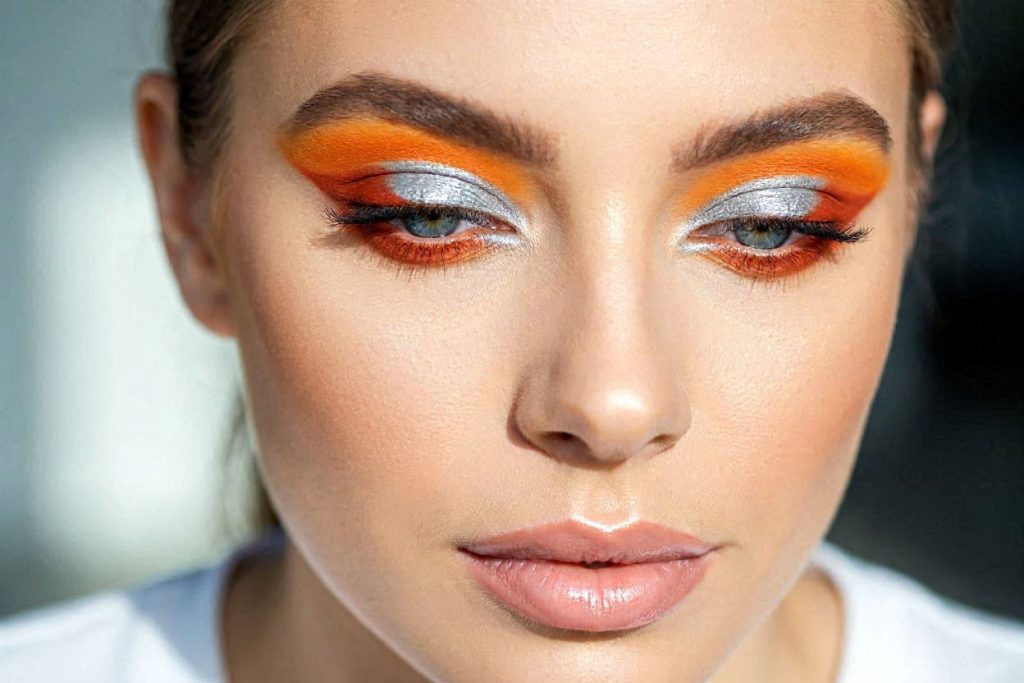
Press pure tangerine orange matte shadow across the entire mobile lid. Deepen the outer corner with rust, blending only where the two shades meet. Press chrome silver pigment onto the inner corner and tap a small amount onto the center of the lid. Finish with black mascara on upper and lower lashes. Keep face makeup minimal with clear lip balm to maintain focus on the eyes.
The high contrast between saturated orange and reflective silver creates a structured, high-impact finish. This look works best when the base is fully set with primer and translucent powder.
Application Note: Press tangerine pigment in thin layers to build saturation evenly. Avoid sweeping motions, which can dilute pigment density.
Application Science & Tool Selection
Successful color application relies on proper tool selection and product chemistry. A flat synthetic brush is required for pressing and packing pigment without fallout. A medium fluffy brush with tapered edges should be used exclusively for crease transitions. Fingertips remain the most effective tool for metallic and cream formulas, as natural warmth helps pigments adhere smoothly to the skin.
Always apply a cream or gel eyeshadow primer before any powder or pigment. Primer creates a stable base that increases pigment adhesion, reduces creasing, and maintains color intensity throughout extended wear. Apply primer thinly, allow it to become tacky, then proceed with shadow application.
Build color through thin, repeated layers rather than a single heavy application. Depth is achieved by placing darker shades first, followed by mid-tones, then light accents. Blending should only occur at transition edges to maintain pigment saturation on the lid.
Adapting to Eye Shape & Undertone
Color placement should align with natural facial structure. For hooded eyes, keep darker shades higher on the lid and focus bright accents on the inner corner and lower lash line to maintain visibility when eyes are open. For round eyes, extend dark pigments slightly outward to create horizontal length. For almond eyes, follow the natural crease line with mid-tones and use metallic accents to highlight the center lid.
Undertone matching ensures color harmony. Warm undertones (yellow, golden, peach) pair best with copper, terracotta, tangerine, and amber. Cool undertones (pink, red, blue) align well with teal, violet, grey-blue, and rose. Neutral undertones can adapt to both palettes by balancing warm and cool shades within the same look.
Troubleshooting Common Application Concerns
If pigment creases: Ensure primer is fully set and tacky before application. Reduce the amount of product and press rather than sweep. Set the base lightly with translucent powder if using highly emollient creams.
If colors appear muddy: Clean your brush between shades. Apply darkest colors first, then build outward with lighter tones. Avoid over-blending, which mixes pigments and reduces saturation.
If metallic formulas patch: Apply with a fingertip or damp synthetic brush. Press gently and avoid dragging across the lid. Allow the first layer to set before adding additional metallic deposits.
If liner smudges during wear: Use a waterproof or tubing formula. Set liquid liner lightly with a matching powder shadow using a fine angled brush. Avoid touching the eye area until fully dry.
A Note on Intentional Application
Color in makeup is not about following a cycle. It is about selecting shades that align with your undertone, applying them with clear technique, and trusting that precision matters more than perfection.
When your routine focuses on placement, layering, and product preparation, eye makeup becomes a structured practice rather than a guessing game. The goal is not to cover or conceal. It is to enhance, define, and maintain. A look that holds through daylight, adapts to indoor lighting, and requires minimal touch-ups supports your day instead of demanding constant adjustment.
That is the intention behind this approach. Clear placement. Consistent layering. Reliable wear. Confidence that comes from knowing your technique will hold.
— THE CHIC STYLE LOOK
Conclusion: Color as a Structured Practice
Vibrant eye makeup succeeds when it is treated as a coordinated system rather than a spontaneous application. By selecting compatible undertones, preparing the lid with primer, pressing pigment in thin layers, and setting transitions properly, you create a finish that remains consistent from morning through evening.
This method works because it respects how cosmetic formulas interact with skin, light, and movement. It does not rely on heavy coverage or excessive blending. It relies on preparation, placement, and product knowledge. When applied correctly, color becomes a reliable tool for structure, definition, and everyday confidence.
In a landscape that often prioritizes quick fixes and heavy layers, choosing technique over volume is a practical shift. It does not require perfection. It requires repetition. And when applied consistently, it transforms eye makeup from a temporary application into a dependable part of your daily routine.
You Will Also Love This
- Your Skin Is Thirsty — The Salt Water Method That Actually Fixes It
- 7 Herbal Teas That Hydrate Your Skin From the Inside
- Tallow Cream: The Ancient Moisturiser That Changed My Skin
- The Complete Inside-Out Hydration Protocol
- New Mother? Your hydration needs are doubled. Read the Postpartum Protocol here.
Disclosure: THE CHIC STYLE LOOK is a participant in the Amazon Associates Program and also shares Shein affiliate links. As an Amazon Associate, we earn from qualifying purchases. We may also earn commissions from Shein links — all at no extra cost to you. Thank you for supporting our work.